Designing a Fair Holiday Policy That Actually Boosts Team Morale
A holiday policy can either fuel team morale or quietly erode it. Learn how to design a fair, transparent, and scalable policy—and operationalize it in Leavo—without creating scheduling chaos.

Designing a Fair Holiday Policy That Actually Boosts Team Morale
Holiday policies are often written with good intentions, then quietly undermine team morale in practice. The gap usually isn’t the rules themselves—it’s how fair, transparent, and manageable they feel to the people using them.
This guide walks through how to design a fair holiday policy, how to communicate it, and how to operationalize it in a leave management platform like Leavo so it’s simple to follow day-to-day.
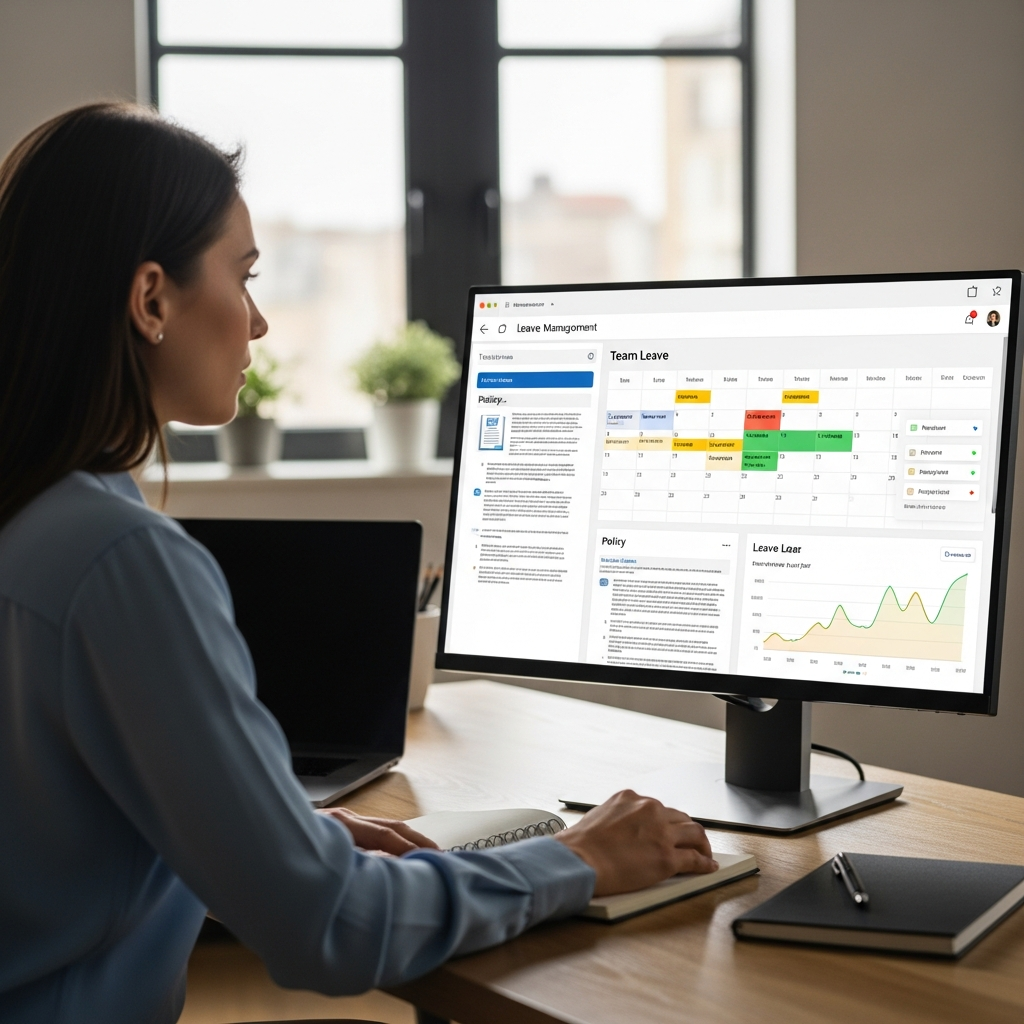
1. Start With Clear Principles of Fairness
Before jumping into rules and edge cases, define the principles that will guide your holiday policy. These principles become your north star when you’re challenged on decisions.
Core principles to define
- Equity vs equality
- Equality: Everyone gets the same number of days.
- Equity: Different entitlements (e.g., tenure, country laws) but with transparent reasoning.
- Predictability
Employees should be able to plan holidays months in advance without surprises. - Transparency
Criteria for approvals, blackout dates, and peak-season rules should be written, easily accessible, and consistently applied. - Business continuity
Minimum staffing levels and critical roles must be protected without appearing arbitrary.
Document these principles in a short section at the top of your written policy, then reflect them in your Leavo configuration (leave types, approval flows, and rules).
2. Translate Legal & Local Requirements Into Practical Rules
HR teams often struggle to blend labor law compliance with global consistency. Your holiday policy should respect both.
Map out the legal baseline
Create a simple table of statutory minimums for each country/region where you operate:
Country        | Statutory annual leave | Public holidays | Notes
--------------|------------------------|-----------------|-----------------------------
UK            | 28 days (incl. PH)     | Varies          | Can include PH in allowance
US (FLSA)     | No federal minimum     | 10 federal PH   | Company-defined PTO common
Germany       | 20 days (5-day week)   | Varies by state | Many companies offer 25–30
India         | 15–30 days (state)     | National + state| Complex regional variation
Then decide where your company will exceed the minimum to stay competitive.
3. Build a Transparent Holiday Request & Approval Model
A policy can look fair on paper and still feel unfair in practice if approvals are unpredictable. Use systematic rules and configure them in Leavo.
Key decisions to make
-
Who can approve what?
- Line managers only?
- HR or admin override for exceptions?
-
What are the approval criteria?
- Maximum number of people off in the same role/team.
- Minimum notice period (e.g., 14 days for longer holidays).
- Peak period restrictions.
-
How are conflicts resolved?
- First-come, first-served?
- Priority by seniority/role/critical project assignment?
- Lottery for highly demanded days (e.g., New Year’s Eve)?
Implementing approval rules in Leavo
Use a structured approach to reflect these criteria in your leave management system:
Leavo Setup Plan
----------------
1. Create leave types: Annual Leave, Public Holidays, Unpaid Leave.
2. Define workflows:
   - Annual Leave: Manager -> HR (if >10 days or during blackout).
   - Public Holidays: Auto-approved, read-only calendar.

3. Turn on real-time notifications:
   - Email alerts to managers on new requests.
   - Daily summary of upcoming absences for HR.
4. Protect Team Morale Around Peak Periods
Peak periods (summer, Christmas, Eid, Diwali, Lunar New Year, etc.) are where holiday policy fairness is truly tested.
Fair allocation strategies for popular dates
-
Rotating priority year-on-year
- Track who got priority last year and rotate.
- Leavo’s requests page can help you quickly filter peak-date approvals by year.
-
Transparent first-come, first-served
- Publish the opening date when requests are accepted.
- Use timestamps from Leavo to resolve disputes without bias.
-
Cap consecutive days during peak
- Limit to e.g. 5 consecutive days during December to spread availability.
-
Require minimum coverage by role
- Configure rules per team so key skills are never fully offline.
Communicate early and often
At least 60–90 days before a known peak period:
- Send a policy reminder email.
- Share a link to your Leavo team calendar so employees can see existing bookings.
- Encourage employees to submit early requests via Leavo.
5. Ensure Visibility: Team Calendars & Real-Time Data
Perceived fairness is tightly linked to visibility. If employees see who’s off and why requests are declined, trust rises.
Use shared calendars
In Leavo, enable calendars so:
- Managers immediately see coverage gaps before approving.
- Employees check who’s already off before submitting requests.
- HR has a cross-company view for capacity planning.
Turn data into management decisions
Use Leavo’s analytics to:
- Identify teams with chronic understaffing during certain months.
- Spot employees who rarely take leave (risk of burnout).
- Compare holiday usage vs policy to refine your rules.
Example metrics to monitor:
Key Holiday Policy KPIs
-----------------------
1. Average days of annual leave taken per employee.
2. % of employees who carry over more than 5 days.
3. Decline rate of holiday requests by team.
4. Peak month overlap rate (more than X people off simultaneously).
5. Engagement survey score on "Fairness of holiday policy".
6. Balance Flexibility With Clear Boundaries
Fairness isn’t rigidity. The best policies combine clear boundaries with structured flexibility.
Where to be firm
- Legal compliance (statutory minimums, public holidays).
- Blackout dates for critical operations, if truly necessary.
- Minimum notice periods and maximum concurrent absences.
Where to be flexible
- Swapping approved days with agreement between employees and managers.
- Allowing unpaid leave in special circumstances.
- Carry-over rules for unused leave, especially after intense project cycles.
Configure these options as separate leave types in Leavo with their own workflows, so flexibility does not become invisible or untracked.
7. Communicate Your Policy Like a Product, Not a PDF
How you roll out the policy is as important as what’s in it.
Build a simple communication plan
Provide quick-reference examples
Offer examples in your policy and HRIS so managers know how to apply it:
Example: Handling clashing Christmas requests
--------------------------------------------
- Check Leavo team calendar: 3 already off from Support.
- Max concurrent off: 3. New request would exceed limit.
- Manager checks rotation list from last year.
- Employee A had priority last year, Employee B did not.
- Decline A, approve B with explanation referencing policy.
8. Iterate Using Feedback and Analytics
Your first version will not be perfect—and that’s fine. Commit to reviewing your holiday policy annually.
Use Leavo’s insights plus employee feedback to:
- Adjust caps and notice periods.
- Revisit blackout days that caused frustration.
- Align leave entitlement with market benchmarks.
9. Checklist: Is Your Holiday Policy Fair?
Use this short checklist when reviewing or redesigning your policy:
- Legal requirements are correctly implemented by country/region.
- Entitlements and rules are clearly documented and visible.
- Criteria for approvals and rejections are explicit.
- Peak-season rules are transparent and time-bound.
- Team calendars and analytics in Leavo are enabled and used.
- Managers are trained on both the policy and the tool.
- Employees understand where to find the policy and how to request time off.
When policy, communication, and technology are aligned, your holiday policy stops being a source of friction and becomes a driver of team morale and predictable operations.